
What Are Similes?
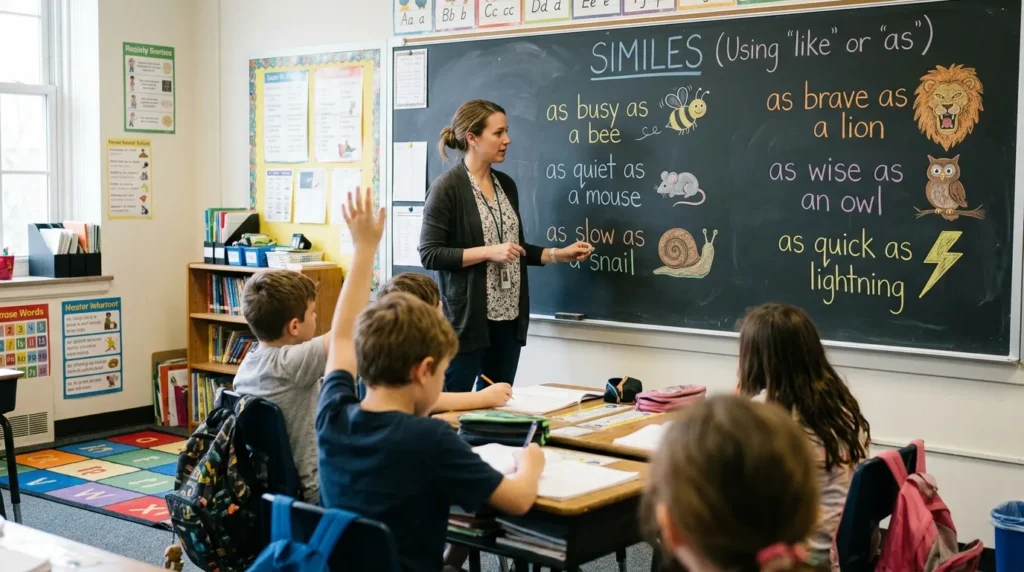
A simile is a figure of speech that compares two different things using the words “like” or “as.” It helps readers picture an idea by connecting it to something familiar.
For example, “Her explanation was as clear as glass” compares an explanation to transparent glass to show that it was easy to understand.
Similes are useful because they make descriptions more vivid, help communicate emotions, and make writing more memorable.
Common Similes for Use
1. As Useful as a Swiss Army Knife
Meaning: Something is helpful in many different situations.
Quote: “Her notebook was as useful as a Swiss Army knife during the busy project.”
Examples:
This small tool is as useful as a Swiss Army knife.
His advice was as useful as a Swiss Army knife when we planned the event.
A well-organized checklist can be as useful as a Swiss Army knife at work.
2. Like a Key to a Locked Door
Meaning: Something provides a solution or helps someone gain access to an opportunity.
Quote: “Learning a new language was like a key to a locked door for her.”
Examples:
Education can be like a key to a locked door.
His suggestion was like a key to a locked door when we faced the problem.
Practice became like a key to a locked door for improving her skills.
3. As Clear as Glass
Meaning: Something is easy to understand or see.
Quote: “The teacher’s instructions were as clear as glass.”
Examples:
Her explanation was as clear as glass.
The rules became as clear as glass after the demonstration.
His message was as clear as glass, leaving no room for confusion.
4. Like a Helping Hand
Meaning: Something provides assistance or support when it is needed.
Quote: “The extra guide was like a helping hand for new students.”
Examples:
The tutorial was like a helping hand during my first week.
Her advice came like a helping hand when I felt confused.
A reliable map can be like a helping hand in an unfamiliar city.
5. As Steady as a Rock
Meaning: Someone or something remains dependable and consistent.
Quote: “During the difficult project, his support was as steady as a rock.”
Examples:
She remained as steady as a rock under pressure.
His guidance was as steady as a rock throughout the assignment.
A good routine can keep your progress as steady as a rock.
6. Like a Spark in the Darkness
Meaning: Something offers hope, inspiration, or a new idea during a difficult time.
Quote: “Her encouraging words were like a spark in the darkness.”
Examples:
The teacher’s feedback was like a spark in the darkness.
One creative idea appeared like a spark in the darkness.
His kindness was like a spark in the darkness on a difficult day.
7. As Quick as Lightning
Meaning: Someone or something acts or moves very quickly.
Quote: “She found the answer as quick as lightning.”
Examples:
He responded as quick as lightning.
The computer processed the simple request as quick as lightning.
She grabbed the falling glass as quick as lightning.
8. Like a Bridge Between Two Worlds
Meaning: Something connects different people, ideas, or experiences.
Quote: “The community program was like a bridge between two worlds.”
Examples:
Language can be like a bridge between two worlds.
The shared project became like a bridge between two teams.
Her story was like a bridge between generations.
9. As Flexible as a Rubber Band
Meaning: Someone or something can adapt easily to changing circumstances.
Quote: “A good plan should be as flexible as a rubber band.”
Examples:
She was as flexible as a rubber band when the schedule changed.
Our approach needs to be as flexible as a rubber band.
His thinking was as flexible as a rubber band during the discussion.
10. Like a Map in an Unknown City
Meaning: Something provides direction when a person is unsure what to do.
Quote: “The step-by-step guide was like a map in an unknown city.”
Examples:
Her instructions were like a map in an unknown city.
The training manual acted like a map in an unknown city.
A clear plan can be like a map in an unknown city.
11. As Bright as a Beacon
Meaning: Something stands out clearly or provides guidance and hope.
Quote: “His example was as bright as a beacon for the younger students.”
Examples:
Her achievement was as bright as a beacon in the community.
The sign was as bright as a beacon in the dark.
His leadership shone as bright as a beacon during the crisis.
12. Like a Puzzle Piece Fitting into Place
Meaning: Something matches a situation perfectly or completes a larger idea.
Quote: “Her final suggestion was like a puzzle piece fitting into place.”
Examples:
The missing detail was like a puzzle piece fitting into place.
His skills were like a puzzle piece fitting into place on our team.
The new evidence felt like a puzzle piece fitting into place.
13. As Reliable as a Clock
Meaning: Someone or something can be trusted to work consistently.
Quote: “The reminder system was as reliable as a clock.”
Examples:
She is as reliable as a clock when completing her tasks.
Our schedule runs as reliably as a clock.
His daily practice was as reliable as a clock.
14. Like Fuel for an Engine
Meaning: Something gives the energy or motivation needed to continue.
Quote: “Positive feedback was like fuel for an engine, helping him keep going.”
Examples:
Encouragement is like fuel for an engine.
A clear goal can be like fuel for an engine.
Her curiosity worked like fuel for an engine during the research project.
15. As Simple as ABC
Meaning: Something is very easy to understand or complete.
Quote: “Once he understood the instructions, the task was as simple as ABC.”
Examples:
Using the basic feature was as simple as ABC.
The teacher made the process as simple as ABC.
After a little practice, the exercise felt as simple as ABC.
Similes for Use in Everyday Sentences
These short similes are useful in conversations, messages, and everyday writing.
As busy as a bee: Very busy.
As light as a feather: Extremely light.
As strong as an ox: Very strong.
As cool as ice: Calm or composed.
As smooth as silk: Very smooth or effortless.
Like two peas in a pod: Very similar or closely connected.
As fast as a cheetah: Extremely fast.
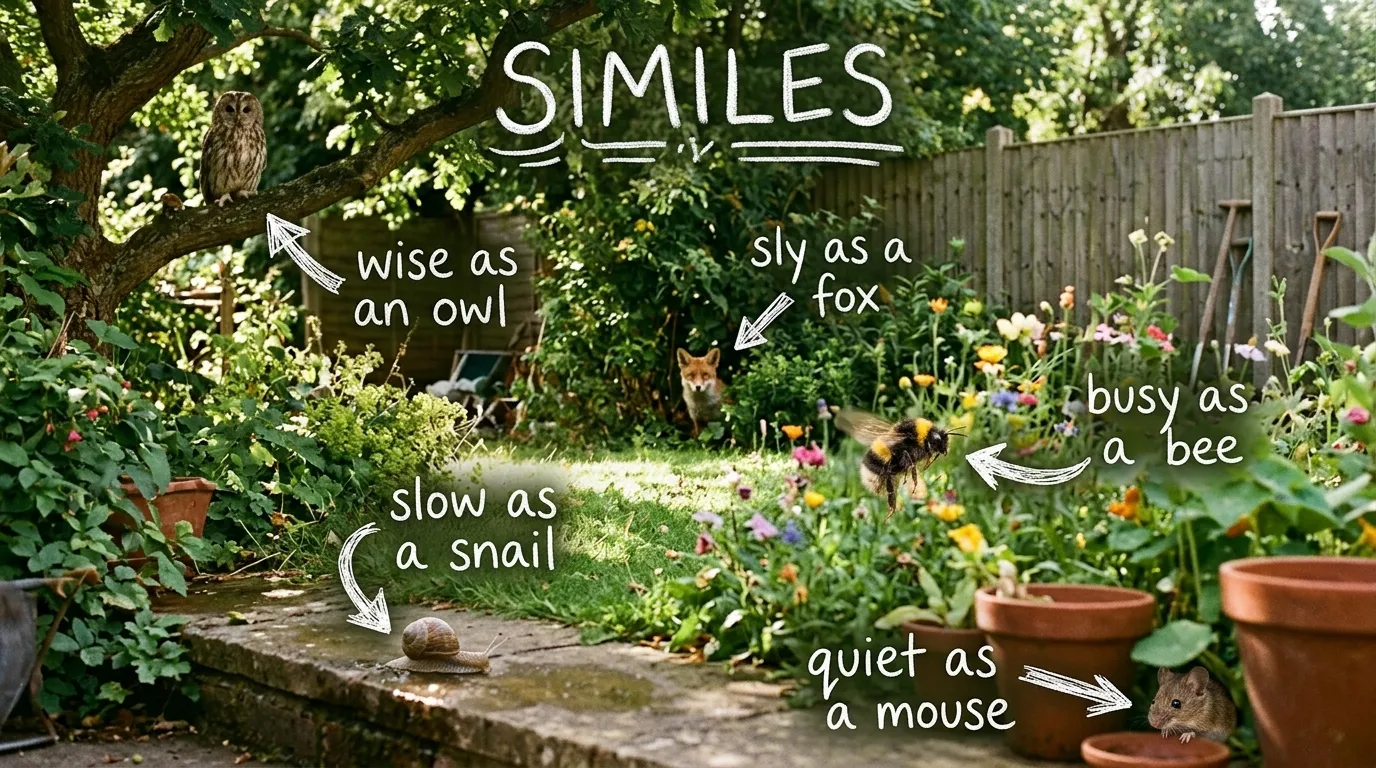
As quiet as a mouse: Very quiet.
Like a breath of fresh air: Refreshing and pleasant.
As sharp as a tack: Very clever or quick to understand.
Example: “The new instructions were as simple as ABC, so I finished the task quickly.”
Similes for Use in Creative Writing
Creative writing benefits from similes that help readers imagine scenes, feelings, and characters.
Similes for Describing People
Her smile was like sunshine on a cloudy day.
He stood as tall as a tree.
She moved as gracefully as a swan.
His voice was as gentle as a summer breeze.
Similes for Describing Feelings
My excitement bubbled like water in a boiling pot.
Her worry followed her like a shadow.
Happiness spread through the room like warm sunlight.
His disappointment felt as heavy as a stone.
Similes for Describing Situations
The classroom buzzed like a beehive.
The news spread like wildfire.
The plan worked like a well-oiled machine.
The moment passed like a dream.
How to Use Similes Effectively
Using similes well means choosing comparisons that fit your meaning and sound natural in context.
Choose a clear comparison. Compare an unfamiliar idea with something your readers already understand.
Use “like” or “as.” These words commonly signal a simile, as in “as quiet as a mouse.”
Match the mood. A cheerful scene may need a bright comparison, while a tense scene may need something more dramatic.
Avoid overusing similes. Too many comparisons in one paragraph can distract readers.
Make the meaning clear. Choose a comparison that strengthens your message instead of confusing it.