
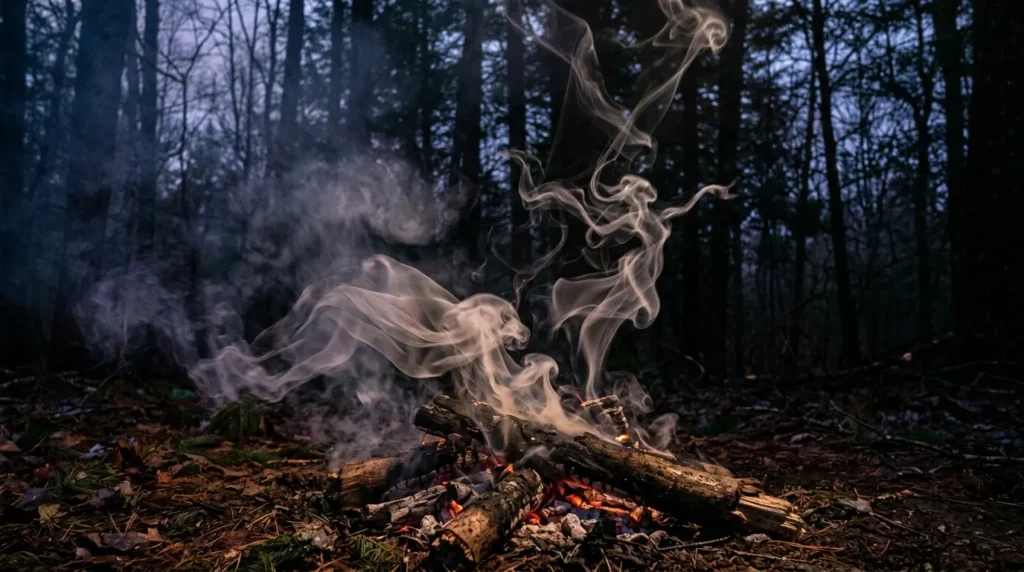
Smoke can rise slowly into the sky, swirl through the air, or spread across a landscape like a mysterious cloud. Writers often use similes to describe its color, movement, thickness, and appearance in a vivid and memorable way.
These similes for smoke can make poems, stories, and descriptive writing more engaging. Whether you are describing smoke from a chimney, a campfire, a burning candle, or a distant fire, the right comparison helps readers imagine what they see.
In this article, you will discover creative similes for smoke, along with their meanings, original quotes, and practical examples.
What Are Similes for Smoke?
A simile is a figure of speech that compares two different things using the words like or as. Similes help readers picture smoke by comparing it to familiar things, such as clouds, ribbons, fog, or flowing water.
For example, “The smoke curled like a ribbon in the wind” compares the movement of smoke to a ribbon twisting through the air.
Writers can use smoke similes to describe its shape, color, movement, density, or mysterious atmosphere.
Best Similes for Smoke
1. Smoke Like a Cloud
Meaning: Smoke that spreads through the air in a large, soft, cloudlike shape.
Quote: “Gray smoke floated like a cloud above the quiet rooftops.”
Examples:
Smoke rose like a cloud from the chimney.
A cloud of smoke drifted across the field.
The campfire sent smoke into the sky like a soft gray cloud.
2. Smoke Like a Ribbon
Meaning: Smoke that twists, curls, or flows in a long, narrow shape.
Quote: “The smoke danced like a ribbon in the gentle morning breeze.”
Examples:
Smoke curled like a ribbon above the candle.
A thin trail of smoke floated like a ribbon through the air.
The chimney released smoke that twisted like a ribbon in the wind.
3. Smoke Like a Ghost
Meaning: Smoke that moves softly and mysteriously, seeming to appear and disappear.
Quote: “The pale smoke drifted like a ghost through the abandoned hallway.”
Examples:
Smoke floated like a ghost across the empty room.
Wisps of smoke vanished like ghosts into the darkness.
The misty smoke moved like a ghost among the trees.
4. Smoke Like a Veil
Meaning: Smoke that spreads over something like a thin covering, partly hiding it from view.
Quote: “A veil of smoke covered the distant hills in a gray haze.”
Examples:
Smoke hung like a veil over the village.
A thin layer of smoke spread like a veil across the valley.
The smoky air covered the street like a veil.
5. Smoke Like a Snake
Meaning: Smoke that twists and winds through the air in a narrow, curved shape.
Quote: “The smoke wound like a snake around the branches of the old tree.”
Examples:
Smoke curled like a snake above the fire.
A twisting trail of smoke moved like a snake through the air.
The chimney sent out smoke that wound like a snake toward the clouds.
6. Smoke Like a Waterfall
Meaning: Smoke that pours or cascades downward or outward in a thick, flowing mass.
Quote: “Smoke spilled over the edge of the rocky ridge like a waterfall.”
Examples:
Thick smoke poured from the building like a waterfall.
Smoke flowed down the hillside like a waterfall of gray mist.
The stage filled with smoke that spilled like a waterfall across the floor.
7. Smoke Like a Gray Blanket
Meaning: Smoke that spreads widely and covers an area.
Quote: “A gray blanket of smoke settled over the sleeping town.”
Examples:
Smoke covered the campsite like a gray blanket.
A blanket of smoke hung above the rooftops.
The field disappeared beneath smoke like a blanket of gray wool.
8. Smoke Like Fog
Meaning: Smoke that makes the air look hazy and reduces visibility.
Quote: “The smoke spread like fog across the empty road.”
Examples:
Smoke drifted like fog through the forest.
The room filled with smoke like fog on a winter morning.
A layer of smoke hung over the landscape like thick fog.
9. Smoke Like a Dancing Shadow
Meaning: Smoke that moves unpredictably, changing its shape as it rises.
Quote: “The smoke swayed like a dancing shadow beneath the flickering light.”
Examples:
Smoke moved like a dancing shadow above the candle.
The fire sent dancing shadows of smoke across the wall.
Wisps of smoke shifted like shadows in the evening breeze.
10. Smoke Like a Feather
Meaning: Smoke that rises lightly and gently, often in a thin trail.
Quote: “A delicate stream of smoke floated like a feather into the blue sky.”
Examples:
Smoke rose like a feather from the extinguished candle.
A thin wisp of smoke drifted like a feather on the breeze.
The chimney released smoke that floated like a feather above the roof.
Similes for Thick Smoke
Thick smoke can appear heavy, dense, dark, or overwhelming. These comparisons are useful for dramatic scenes and descriptive writing.
11. Smoke Like a Black Wall
Meaning: Very dense, dark smoke that blocks the view.
Quote: “A black wall of smoke rose beyond the distant hills.”
Examples:
Thick smoke spread like a black wall across the horizon.
The dark smoke looked like a wall hiding the building.
A wall of smoke obscured the view of the forest.
12. Smoke Like Ink in Water
Meaning: Smoke that spreads and curls into irregular shapes, resembling ink dispersing through water.
Quote: “The dark smoke unfurled like ink in water against the pale sky.”
Examples:
Smoke swirled like ink in water above the fire.
Black smoke spread like ink across the morning sky.
The smoke curled like ink in water before fading away.
13. Smoke Like a Dark Curtain
Meaning: Thick smoke that hangs in front of something and conceals it.
Quote: “A dark curtain of smoke hid the far end of the street.”
Examples:
Smoke covered the doorway like a dark curtain.
A curtain of smoke hung above the burning wood.
The distant buildings disappeared behind smoke like a dark curtain.
14. Smoke Like a Storm Cloud
Meaning: Smoke that forms a large, dark mass in the sky.
Quote: “The rising smoke gathered like a storm cloud above the hillside.”
Examples:
Dark smoke billowed like a storm cloud over the field.
The chimney released smoke that looked like a storm cloud.
A mass of smoke spread like a storm cloud across the sky.
15. Smoke Like a Moving Mountain
Meaning: An enormous mass of smoke that appears large, heavy, and imposing.
Quote: “A towering mass of smoke rose like a moving mountain beyond the trees.”
Examples:
The thick smoke billowed like a moving mountain.
A huge cloud of smoke rose like a mountain above the factory.
The smoke rolled across the horizon like a dark mountain.
Similes for Smoke Rising and Swirling
These similes focus on the movement and changing shapes of smoke.
16. Smoke Like a Spiral Staircase
Meaning: Smoke that twists upward in a spiral pattern.
Quote: “The smoke climbed like a spiral staircase toward the open sky.”
Examples:
Smoke curled like a spiral staircase above the campfire.
A twisting column of smoke rose like a spiral staircase.
The incense smoke climbed like a spiral staircase through the sunlight.
17. Smoke Like a Winding River
Meaning: Smoke that flows in a long, curved path.
Quote: “A trail of smoke wound like a river through the morning air.”
Examples:
Smoke drifted like a winding river over the rooftops.
The chimney released smoke that flowed like a river toward the clouds.
A ribbon of smoke curled like a river between the trees.
18. Smoke Like a Whirling Dervish
Meaning: Smoke that spins and swirls rapidly in changing directions.
Quote: “The smoke spun like a whirling dervish in the restless wind.”
Examples:
Smoke swirled like a whirling dervish above the flames.
The wind twisted the smoke like a whirling dervish.
Wisps of smoke spun like a whirling dervish before disappearing.
19. Smoke Like a Climbing Vine
Meaning: Smoke that rises slowly while twisting and curling around itself.
Quote: “The smoke climbed like a vine toward the rafters.”
Examples:
Smoke rose like a climbing vine from the candle.
A thin trail of smoke curled like a vine above the fire.
The incense smoke climbed like a vine through the still air.
20. Smoke Like a Silk Scarf
Meaning: Smoke that flows smoothly and gracefully through the air.
Quote: “The pale smoke floated like a silk scarf caught in a gentle breeze.”
Examples:
Smoke drifted like a silk scarf above the candle.
The wind carried the smoke like a silk scarf across the garden.
Thin wisps of smoke moved like a silk scarf in the sunlight.
Similes for Smoke in Poetry and Creative Writing
Smoke can suggest mystery, change, loss, or something disappearing. These comparisons are especially useful for poems and imaginative stories.
21. Smoke Like a Fading Dream
Meaning: Smoke that disappears gradually, suggesting something temporary or difficult to hold on to.
Quote: “The last traces of smoke vanished like a fading dream at dawn.”
Examples:
The smoke disappeared like a fading dream.
Her memories drifted away like smoke from a dying fire.
The misty smoke faded like a dream in the morning light.
22. Smoke Like a Whisper
Meaning: Smoke that moves quietly and gently, almost unnoticed.
Quote: “A thin trail of smoke rose like a whisper into the silent night.”
Examples:
Smoke slipped through the window like a whisper.
A faint wisp of smoke floated like a whisper above the candle.
The smoke moved like a whisper through the still air.
23. Smoke Like a Forgotten Secret
Meaning: Smoke that appears mysterious or hidden, as if concealing something.
Quote: “The smoke curled like a forgotten secret around the ruins.”
Examples:
Smoke lingered like a forgotten secret above the ashes.
The gray haze drifted like a forgotten secret through the empty house.
Wisps of smoke disappeared like a forgotten secret in the darkness.
24. Smoke Like a Veil of Mystery
Meaning: Smoke that creates an unclear, mysterious, or dreamlike atmosphere.
Quote: “A veil of smoke wrapped the old forest in mystery.”
Examples:
Smoke covered the abandoned building like a veil of mystery.
The smoke drifted through the trees like a veil of mystery.
A thin haze of smoke gave the landscape the appearance of a mysterious dream.
25. Smoke Like a Departing Spirit
Meaning: Smoke that rises and disappears, creating an image of something quietly leaving.
Quote: “The final wisp of smoke floated away like a departing spirit.”
Examples:
Smoke rose from the ashes like a departing spirit.
The pale smoke faded into the sky like a departing spirit.
The last curl of smoke vanished like a spirit into the night.
Tips for Using Similes for Smoke
Describe the movement: Use comparisons such as “like a ribbon” or “like a winding river” for curling and drifting smoke.
Show the thickness: Use “like a black wall” or “like a dark curtain” when describing dense smoke.
Create an atmosphere: Comparisons such as “like a ghost” or “like a fading dream” can make a scene feel mysterious.
Match the comparison to the setting: Gentle smoke from incense may resemble a silk scarf, while thick smoke from a fire may resemble a storm cloud.
Avoid unnecessary repetition: Choose a comparison that adds a new detail instead of repeating the same image.
Frequently Asked Questions
1. What is a good simile for smoke?
A good simile is “smoke curled like a ribbon in the wind.” It describes the twisting movement of smoke in a clear, visual way.
2. What is a simile for thick smoke?
“Thick smoke spread like a black wall” is a useful simile because it emphasizes the density and darkness of the smoke.
3. What can smoke be compared to?
Smoke can be compared to clouds, ribbons, snakes, ghosts, fog, waterfalls, curtains, and flowing rivers, depending on its shape and movement.
4. What is a poetic simile for smoke?
“Smoke drifted like a fading dream” is a poetic simile that suggests something delicate, temporary, and gradually disappearing.
5. How do you describe smoke rising into the sky?
You can write, “Smoke rose like a feather into the sky” to describe a light, gentle trail, or “Smoke climbed like a spiral staircase” to emphasize its twisting movement.
6. Why do writers use similes for smoke?
Writers use smoke similes to help readers visualize its appearance, movement, and atmosphere. These comparisons can make a scene more vivid, emotional, or mysterious.
Conclusion
Similes for smoke help writers describe its drifting movement, changing shapes, and mysterious appearance. Comparisons such as “smoke like a ribbon,” “smoke like a cloud,” and “smoke like a ghost” create clear mental pictures for readers. For thicker smoke, images like a black wall or a dark curtain emphasize how it spreads and hides the surroundings. Poetic comparisons, such as smoke fading like a dream, can also add emotion and atmosphere to creative writing. When choosing a simile, consider whether the smoke is thin, thick, swirling, or rising gently. The most effective comparison is one that matches the scene and helps readers imagine the smoke in a memorable way.