
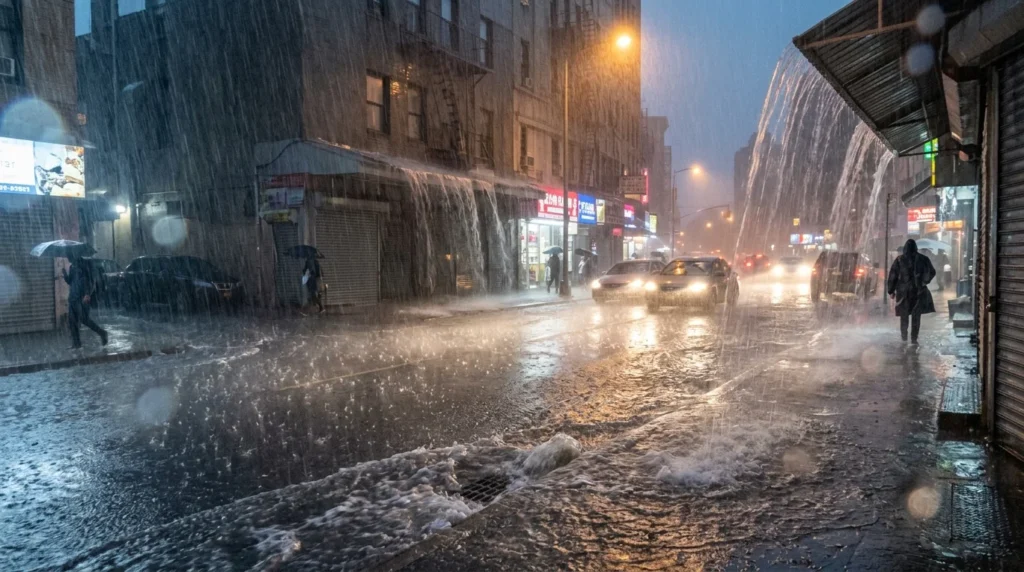
What Is a Simile for Rain Pouring?
A simile is a figure of speech that compares two different things using the words like or as. A simile for pouring rain describes the appearance, sound, speed, or intensity of rainfall through a comparison.
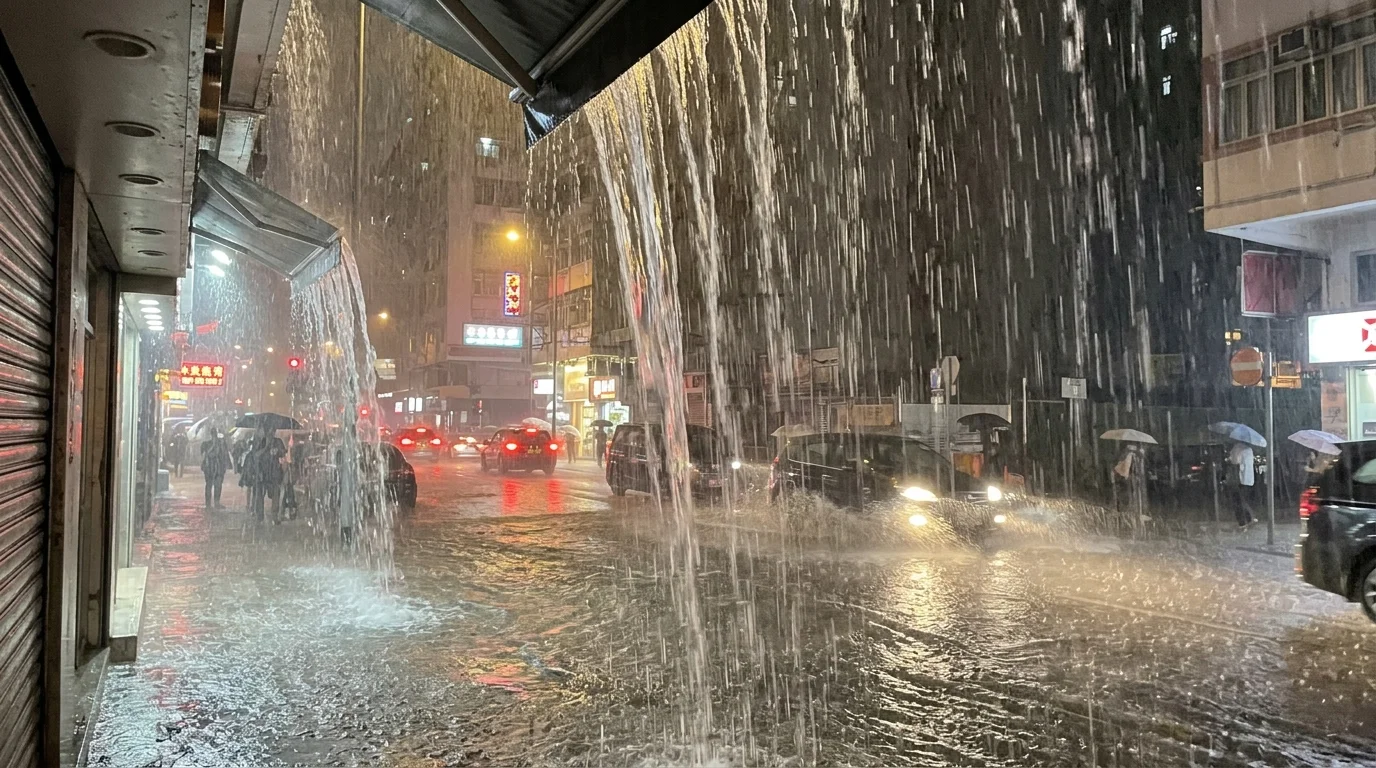
For example, “The rain poured like a waterfall” compares heavy rainfall to water rushing over a steep drop. It helps readers imagine a powerful, continuous flow of water.
Writers use rain similes to create atmosphere, describe storms, build suspense, and make ordinary weather feel dramatic.
25 Similes for Rain Pouring
1. Rain Poured Like a Waterfall
Meaning: The rain fell heavily and continuously, resembling a powerful waterfall.
Quote: “Rain poured like a waterfall from the dark, swollen clouds.”
Examples:
- Water rushed down the street as rain poured like a waterfall.
- The children watched rain pour like a waterfall from the roof.
- In the story, the storm swept across the village like a giant waterfall falling from the sky.
2. Rain Fell Like Sheets of Water
Meaning: The rain was so heavy that it seemed to form solid sheets rather than individual drops.
Quote: “Rain fell like sheets of water, hiding the mountains from view.”
Examples:
- We could barely see the road as rain fell like sheets of water.
- Sheets of rain blurred the classroom windows.
- The entire garden disappeared behind a curtain of falling water.
3. Rain Poured Like Buckets Being Emptied
Meaning: This simile describes extremely heavy rainfall, as if someone were dumping buckets of water from above.
Quote: “The rain poured like buckets being emptied over the rooftops.”
Examples:
- We ran inside when the rain started pouring like buckets of water.
- Rain poured over the playground as if the sky were emptying giant buckets.
- By the time the bus arrived, water was streaming down the sidewalks.
4. Rain Came Down Like a Broken Faucet
Meaning: The rain fell in a steady, forceful stream, much like water flowing from a faucet that cannot be turned off.
Quote: “Rain came down like a broken faucet, flooding the garden paths.”
Examples:
- The rain kept pouring like a broken faucet throughout the afternoon.
- Water streamed from the gutters as the storm continued.
- The narrator described the relentless rain as a faucet left running above the town.
5. Rain Poured Like a River From the Sky
Meaning: This comparison emphasizes the enormous amount of water falling from the clouds.
Quote: “A river seemed to pour from the sky, sweeping leaves along the road.”
Examples:
- Rain poured like a river from the sky during the evening storm.
- The driveway filled with rushing water.
- The clouds released a river of rain over the countryside.
6. Rain Fell Like a Giant Shower
Meaning: The rain came down in a heavy, continuous stream, similar to water pouring from a large showerhead.
Quote: “The rain fell like a giant shower, drenching everyone who stepped outside.”
Examples:
- We waited under the bus shelter while rain fell like a giant shower.
- Water splashed against the patio during the downpour.
- The storm soaked the trees as if the entire forest were standing beneath a shower.
7. Rain Poured Like a Water Hose on Full Blast
Meaning: This simile describes rain that falls with great force and little interruption.
Quote: “Rain poured like a water hose on full blast, pounding the empty street.”
Examples:
- The rain hit our backyard like a hose turned all the way up.
- Water rushed off the roof during the sudden downpour.
- The storm unleashed a powerful stream of rain over the parking lot.
8. Rain Fell Like a Thick Curtain
Meaning: Heavy rainfall obscured the view, making buildings, trees, or distant objects difficult to see.
Quote: “Rain fell like a thick curtain, concealing the road beyond the gate.”
Examples:
- A curtain of rain hid the distant hills.
- The houses looked blurry through the heavy downpour.
- Rain fell like a curtain across the field, leaving only faint shapes visible.
9. Rain Poured Like Thousands of Tiny Waterfalls
Meaning: This comparison suggests that water was streaming from many places at once, such as roofs, branches, and gutters.
Quote: “Rain poured like thousands of tiny waterfalls from every roof and tree.”
Examples:
- Water streamed from the branches like miniature waterfalls.
- Every gutter spilled water onto the pavement.
- The storm turned the hillside into a collection of rushing streams.
10. Rain Fell Like Stones From the Clouds
Meaning: This simile emphasizes the force and impact of large, hard-hitting raindrops. It is especially suitable for a violent storm.
Quote: “Rain fell like stones from the clouds, hammering the metal roof.”
Examples:
- The heavy drops struck the windows with surprising force.
- Rain beat against the barn like stones thrown from above.
- The family listened to the pounding rain from inside their farmhouse.
11. Rain Poured Like a Floodgate Had Opened
Meaning: The rain began suddenly and heavily, as if a barrier had been removed and water could rush freely.
Quote: “The rain poured like a floodgate had opened, swallowing the dusty road in minutes.”
Examples:
- The storm burst over the town like an opened floodgate.
- Water rushed into the drainage channels.
- Without warning, rain poured across the valley in a powerful rush.
12. Rain Fell Like a Million Silver Strings
Meaning: This poetic simile describes countless thin streams of rain falling together, often creating a shimmering appearance.
Quote: “Rain fell like a million silver strings, weaving a shining curtain across the garden.”
Examples:
- Streetlights glimmered through the falling rain.
- The raindrops shimmered in the evening light.
- From the balcony, the storm looked like silver threads hanging from the clouds.
13. Rain Poured Like a Dam Had Burst
Meaning: The comparison communicates an overwhelming rush of water and the intensity of a powerful downpour.
Quote: “Rain poured like a dam had burst, racing down the hillside.”
Examples:
- The sudden downpour sent water rushing across the courtyard.
- Rain poured over the fields with the force of a broken dam.
- The character watched the muddy water surge along the road.
14. Rain Fell Like Water Spilling From an Overturned Bowl
Meaning: This simile makes the sky seem like a container tipped over, releasing all its water at once.
Quote: “Rain fell like water spilling from an overturned bowl, soaking the garden in seconds.”
Examples:
- The clouds released rain as though someone had tipped a huge bowl overhead.
- The backyard became wet almost immediately.
- Water poured from the sky and splashed across the stone steps.
15. Rain Poured Like a Relentless Drumbeat
Meaning: This comparison focuses on the steady, repetitive sound of heavy rain striking roofs, windows, and pavement.
Quote: “Rain poured like a relentless drumbeat, filling the night with a deep, steady roar.”
Examples:
- The rain drummed against the bedroom window all night.
- Heavy drops beat on the tin roof like a thousand tiny drummers.
- The storm’s constant rhythm made it difficult to hear the television.
16. Rain Fell Like a Flood of Beads
Meaning: This simile compares individual raindrops to countless beads falling rapidly together.
Quote: “Rain fell like a flood of glass beads, scattering across the pavement.”
Examples:
- Droplets bounced off the sidewalk like tiny beads.
- The garden sparkled as rain scattered across the leaves.
- A wave of falling droplets covered the windows.
17. Rain Poured Like a Tap Left Running
Meaning: The rain continued without stopping, much like a tap that has been left open.
Quote: “Rain poured like a tap left running, turning the path into a muddy stream.”
Examples:
- The rain continued steadily throughout the afternoon.
- Water flowed from the roof as if the sky had left a tap running.
- We postponed the picnic because the rain showed no sign of stopping.
18. Rain Fell Like a Wall of Water
Meaning: This simile describes an extremely dense downpour that makes it difficult to see or move through the rain.
Quote: “A wall of water fell across the highway, forcing drivers to slow down.”
Examples:
- We could barely see the buildings through the wall of rain.
- The storm covered the entire field in a thick downpour.
- A wall of water swept across the village as the clouds opened.
19. Rain Poured Like Water From a Giant Watering Can
Meaning: This comparison creates an image of water spreading over a large area, similar to a watering can covering a garden.
Quote: “Rain poured like water from a giant watering can, soaking every corner of the park.”
Examples:
- The flowerbeds filled with water during the storm.
- Rain spread across the lawn like water sprinkled from an enormous can.
- Every plant in the garden glistened beneath the downpour.
20. Rain Fell Like a Thousand Rushing Streams
Meaning: This simile emphasizes the continuous movement of water, especially when rain runs down streets, slopes, and rooftops.
Quote: “Rain fell like a thousand rushing streams, carrying fallen leaves toward the drains.”
Examples:
- Water flowed down the sloping driveway.
- Tiny streams formed along the edges of the road.
- After hours of rain, the hillside looked as if countless streams were racing downhill.
21. Rain Poured Like a Sky Full of Leaking Pipes
Meaning: This humorous comparison suggests that water seems to be leaking from every part of the sky.
Quote: “Rain poured like a sky full of leaking pipes, drenching the town from every direction.”
Examples:
- We laughed about the weather as rain soaked our clothes.
- Water fell everywhere, as though the clouds had sprung a thousand leaks.
- The storm made the whole neighborhood feel like a building with a broken roof.
22. Rain Fell Like a Cascade of Glass
Meaning: This poetic comparison suggests that the falling rain looked bright, sharp, and sparkling. It describes appearance rather than literal hardness.
Quote: “Rain fell like a cascade of glass, glittering beneath the streetlights.”
Examples:
- The illuminated raindrops shimmered in the darkness.
- The garden sparkled as rain streamed from the leaves.
- From the window, the downpour looked like a shining waterfall of glass.
23. Rain Poured Like a Torrent Down the Hillside
Meaning: A torrent is a powerful, fast-moving flow of water. This simile is useful when describing heavy rain and the runoff it creates.
Quote: “Rain poured like a torrent down the hillside, rushing toward the valley below.”
Examples:
- Water rushed down the muddy slope after the storm began.
- The mountain path disappeared beneath flowing rainwater.
- Rainwater surged through the narrow channels in the field.
24. Rain Fell Like a Thousand Fingers Tapping the Roof
Meaning: This simile gives rainfall a rhythmic, almost human quality. It is especially effective for describing the sound of rain.
Quote: “Rain fell like a thousand fingers tapping the roof, keeping the sleeping house company.”
Examples:
- We listened to the rain tapping on the windows.
- The roof echoed with the sound of countless droplets.
- A steady rhythm of rain filled the quiet evening.
25. Rain Poured Like the Clouds Had Turned Inside Out
Meaning: This imaginative comparison suggests that the clouds are releasing all their stored water at once.
Quote: “Rain poured like the clouds had turned inside out, flooding the garden paths with water.”
Examples:
- The storm arrived suddenly, and rain covered the streets.
- It seemed as if the clouds had emptied everything they held.
- Dark clouds opened above the town, releasing a tremendous downpour.
Short Similes for Rain Pouring
If you need a quick comparison for a school assignment, poem, caption, or story, these short similes are easy to remember and use.
- Like a waterfall.
- Like a river from the sky.
- Like sheets of water.
- Like a broken faucet.
- Like a giant shower.
- Like a wall of water.
- Like a burst dam.
- Like a relentless drumbeat.
- Like silver strings.
- Like a floodgate opening.
- Like a curtain of water.
- Like a thousand rushing streams.
Similes for Heavy Rain in Different Writing Styles
The best simile depends on the mood and purpose of your writing. A storm in an adventure story may need a powerful comparison, while a poem might benefit from something more beautiful or emotional.
For Creative Writing
Use strong comparisons to make a scene feel intense and immediate.
- The rain struck the roof like a thousand impatient drummers.
- Water poured from the clouds like a waterfall released from the heavens.
- The storm swept across the valley like a wild river of rain.
For Poetry
Poetic similes can emphasize sound, movement, beauty, or emotion.
- Rain fell like silver threads stitched into the night.
- The clouds poured their sorrow like a river without an end.
- The rain whispered and roared like a song played by the sky.
For School Assignments
Simple, clear similes are often the most effective for young writers.
- The rain poured like a waterfall.
- The rain hit the roof like a drumbeat.
- The rain fell like water from a shower.
- The rain covered the street like a curtain.
For Funny Descriptions
Humorous comparisons can make an ordinary storm more memorable.
- The rain fell like the sky had forgotten to turn off its tap.
- The clouds poured water like someone had tipped over a giant bucket.
- The rain attacked our picnic like a thousand tiny water balloons.
How to Write Your Own Similes for Pouring Rain
You do not need to memorize every comparison to write a good simile. Start by deciding what you want readers to imagine.
1. Focus on the rain’s intensity. Is it gentle, steady, or extremely heavy? Compare a downpour to a waterfall, floodgate, or powerful stream.
2. Think about the sound. Rain striking a roof might resemble drumming, tapping, or rapid footsteps.
3. Describe what the rain looks like. A thick curtain of water can hide distant buildings, while silver strings can suggest rain shining in the light.
4. Match the mood. A violent storm in a suspenseful story may call for a wall of water, while a peaceful rainy evening may suit silver threads falling from the clouds.
5. Keep the comparison clear. A simile should help readers understand the scene rather than make them stop to figure out what it means.
For example, start with the sentence, “The rain fell heavily.” Then ask yourself what heavy rain resembles. You might write, “The rain fell like a waterfall, drowning out the sound of passing cars.”
The second sentence creates a clearer picture and adds sound to the scene.
Simile vs. Metaphor for Pouring Rain
Similes and metaphors both help writers describe rainfall, but they work differently.
| Simile | Metaphor |
|---|---|
| The rain poured like a waterfall. | The rain was a waterfall from the sky. |
| The rain fell like silver strings. | The rain was silver thread. |
| The storm sounded like a drumbeat. | The storm was a giant drum. |
A simile makes an explicit comparison using words such as like or as. A metaphor describes one thing as if it were another.
Both can make descriptions more vivid. Choose a simile when you want to make a comparison clear and accessible, or use a metaphor when you want a more direct, imaginative statement.