
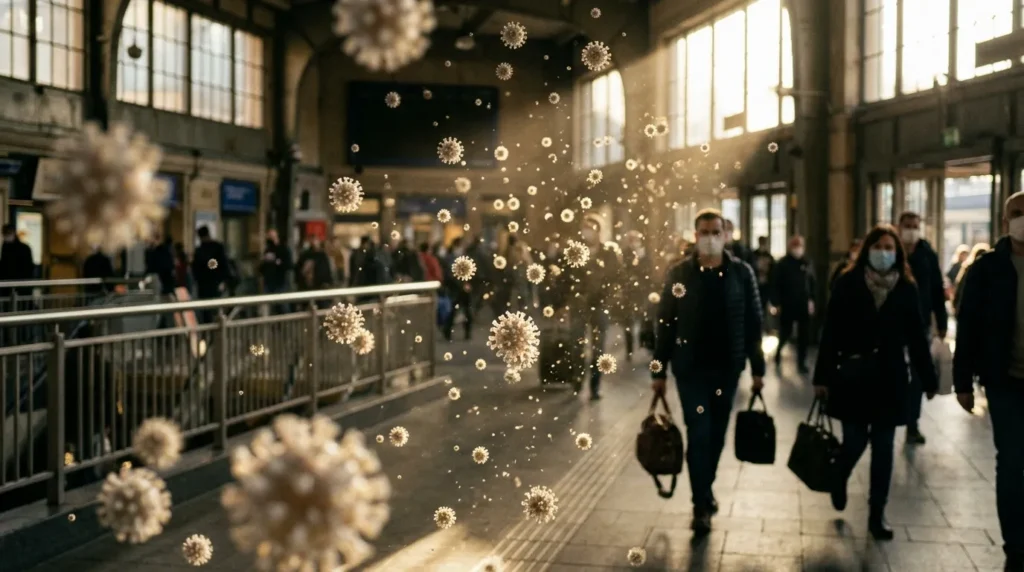
What Is a Simile About COVID 19?
A simile is a figure of speech that compares two different things using the words “like” or “as.” It helps readers understand an experience by connecting it to something familiar.
For example:
The streets were as empty as a deserted playground. This describes how quiet public places could feel during lockdowns.
Fear spread like wildfire. This expresses how quickly anxiety and rumors could spread through communities.
Hope shone like a candle in the darkness. This represents the encouragement people found during difficult times.
These comparisons describe human experiences and emotions associated with the pandemic. They are figurative expressions, not scientific descriptions of how COVID-19 spreads or affects the body.
35 Similes for COVID-19 With Meanings and Examples
1. COVID-19 Spread Like Wildfire
Meaning: This comparison describes how quickly infections or news about the pandemic spread through communities. It should be understood figuratively, rather than as a precise description of transmission.
Quote: “News of the outbreak traveled like wildfire, reaching distant communities in a matter of days.”
Examples:
News about the virus spread like wildfire across social media.
Worry traveled like wildfire through the neighborhood.
Reports of new cases spread like wildfire around the world.
2. The World Felt as Quiet as a Desert
Meaning: This simile describes the unusual silence in public places during lockdowns.
Quote: “During the lockdown, the busy city felt as quiet as a desert.”
Examples:
The school playground was as quiet as a desert.
Empty shopping streets looked as silent as a desert.
The usually crowded station felt as quiet as a desert.
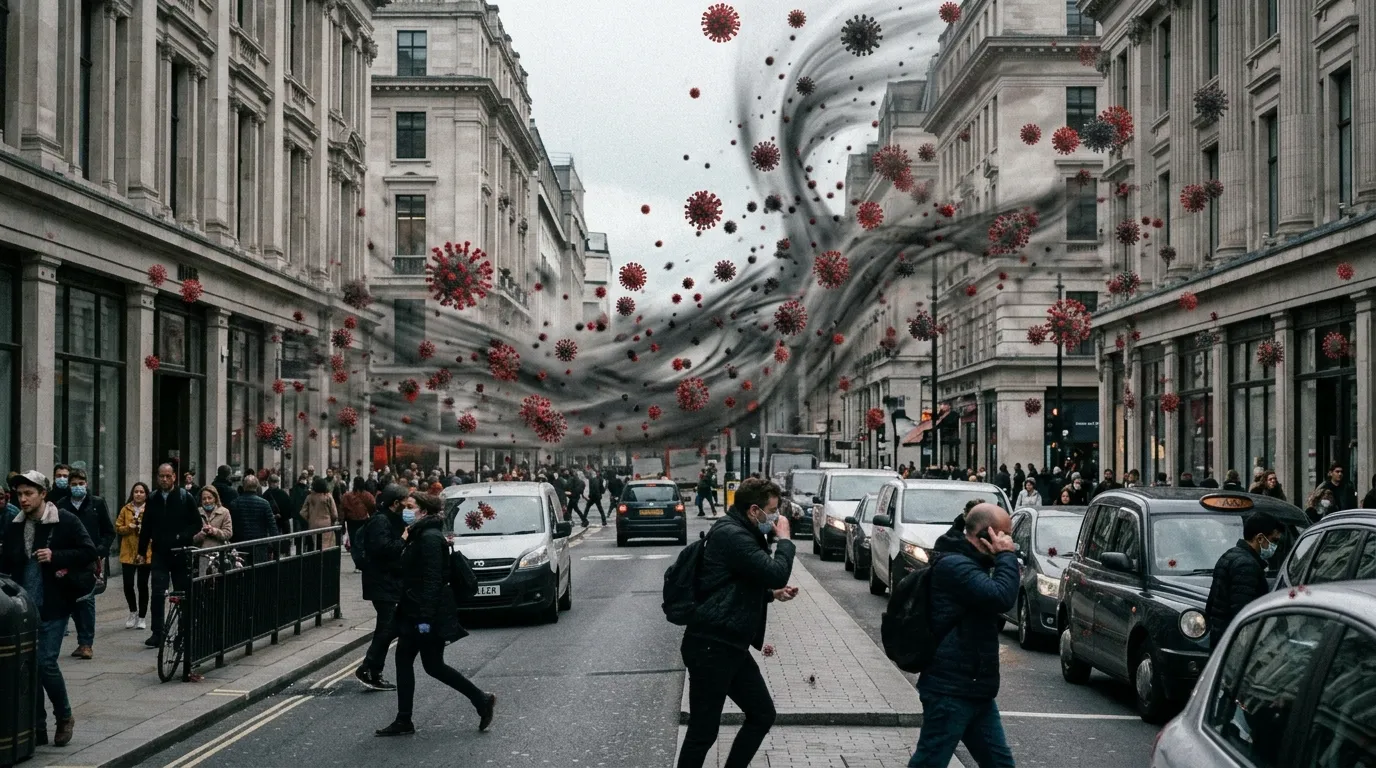
3. Fear Spread Like a Dark Shadow
Meaning: This comparison shows how fear seemed to follow people throughout their daily lives.
Quote: “Fear spread like a dark shadow over families waiting for news about their loved ones.”
Examples:
Uncertainty followed the community like a dark shadow.
Fear hung over the town like a dark shadow.
The frightening headlines seemed to follow us like a shadow.
4. Lockdown Felt Like Being in a Cage
Meaning: This simile expresses the frustration and restriction some people experienced while staying at home.
Quote: “After weeks indoors, he felt as trapped as a bird in a cage.”
Examples:
The long lockdown sometimes felt like living in a cage.
She felt trapped like a bird behind closed windows.
Staying indoors for so long made the house feel like a cage.
5. Hope Shone Like a Candle
Meaning: This comparison represents hope as a small but powerful source of comfort during difficult times.
Quote: “Every message of encouragement shone like a candle in the darkness of uncertainty.”
Examples:
The doctor’s reassuring words glowed like a candle in the darkness.
A call from a friend was like a candle on a gloomy night.
The promise of recovery shone like a candle in the distance.
6. The Hospital Was as Busy as a Beehive
Meaning: This simile describes the intense activity of healthcare workers caring for patients.
Quote: “During the outbreak, the hospital was as busy as a beehive.”
Examples:
Nurses moved through the hospital as busily as bees.
The emergency department was as busy as a beehive.
Doctors and nurses worked like busy bees to care for patients.
7. Uncertainty Hung Like a Thick Fog
Meaning: This comparison describes how unclear and unpredictable the future seemed during the pandemic.
Quote: “Uncertainty hung like a thick fog over the coming school year.”
Examples:
Questions about reopening lingered like fog over the city.
The future seemed as unclear as a road covered in mist.
Families faced each new announcement like travelers entering a foggy forest.
8. The Streets Were as Empty as a Ghost Town
Meaning: This simile describes streets with very few people or vehicles during lockdowns.
Quote: “The downtown area looked as empty as a ghost town during the strictest days of lockdown.”
Examples:
The shopping district was as empty as a ghost town.
The usually crowded roads looked like streets in a ghost town.
The market was as deserted as a ghost town early that morning.
9. Time Moved Like a Slow River
Meaning: This comparison expresses how slowly time seemed to pass during long periods at home.
Quote: “With no school or outdoor activities, the days moved like a slow river.”
Examples:
The afternoon crawled like a slow river while I waited for a call.
Lockdown days seemed to drift by like a slow-moving stream.
Waiting for restrictions to ease felt like watching a river move one drop at a time.
10. Loneliness Felt as Heavy as a Mountain
Meaning: This simile describes the emotional burden of being separated from friends and family.
Quote: “For those living alone, loneliness sometimes felt as heavy as a mountain.”
Examples:
Missing her grandparents felt as heavy as a mountain.
The long separation weighed on him like a mountain.
Some people carried loneliness like a heavy backpack.
11. Face Masks Became as Common as Shoes
Meaning: This comparison describes how face masks became a familiar part of everyday life in many places.
Quote: “Soon, face masks were as common as shoes whenever we stepped outside.”
Examples:
Masks became as familiar as school bags.
Seeing masked shoppers became as ordinary as seeing people carrying groceries.
Face coverings became part of daily routines like carrying keys.
12. Video Calls Connected Us Like Bridges
Meaning: This simile shows how online communication helped people maintain relationships while physically separated.
Quote: “Video calls connected our distant family members like bridges stretching across a wide river.”
Examples:
Online classrooms linked students like bridges across a valley.
Weekly video chats brought grandparents and grandchildren together like bridges.
Technology connected isolated friends like a bridge over troubled water.
13. The Pandemic Hit Like a Sudden Storm
Meaning: This comparison describes how unexpectedly COVID-19 disrupted everyday life.
Quote: “The pandemic hit our community like a sudden storm, changing routines almost overnight.”
Examples:
School closures arrived like a sudden storm.
The outbreak disrupted family plans like a storm scattering leaves.
News of the emergency struck like thunder on a clear day.
14. Kindness Spread Like Sunshine
Meaning: This simile represents acts of kindness that brought comfort and encouragement during a difficult period.
Quote: “Neighbors helping one another spread kindness like sunshine through a cloudy morning.”
Examples:
Volunteers delivered groceries like rays of sunshine to isolated residents.
A kind message brightened her day like sunshine.
Community support spread like warm sunlight across the neighborhood.
15. Worry Was Like a Drum Beating in the Mind
Meaning: This comparison describes persistent anxiety that is difficult to ignore.
Quote: “As he waited for his test results, worry beat in his mind like a distant drum.”
Examples:
Concern for her family sounded like a drum in her thoughts.
Each new headline made anxiety pound like a drum.
His worries returned like the steady beat of a drum.
16. Recovery Felt Like a Sunrise
Meaning: This simile represents renewed hope and the gradual return of strength after a difficult period.
Quote: “As her strength returned, recovery felt like a sunrise after a long night.”
Examples:
Feeling better was like watching the sunrise after a storm.
Each small improvement brought light like the morning sun.
Returning to familiar routines felt like a new dawn.
17. The Virus Was an Invisible Enemy Like a Hidden Thief
Meaning: This comparison describes how a virus cannot be seen with the naked eye and may go unnoticed before an infection is recognized.
Quote: “The virus seemed like a hidden thief, disrupting ordinary life without being visible.”
Examples:
The invisible virus reminded people of an unseen intruder.
The outbreak disrupted routines like a thief stealing peaceful moments.
People learned to take precautions against a threat they could not see directly.
18. The News Changed Like the Weather
Meaning: This simile describes how information and public guidance sometimes changed as new evidence became available.
Quote: “The headlines seemed to change like the weather as researchers learned more about the virus.”
Examples:
Public discussions shifted like clouds in a changing sky.
New information arrived like changing winds.
Our understanding developed like the weather moving from one season to another.
19. Social Distancing Felt Like Standing on Separate Islands
Meaning: This comparison describes the physical separation people maintained to reduce opportunities for transmission.
Quote: “At the gathering, everyone stood apart like people on separate islands.”
Examples:
The chairs were spaced like islands across a sea.
Friends waved from a distance like neighbors on opposite shores.
The empty seats between us looked like stretches of ocean.
20. The School Was as Silent as a Library
Meaning: This simile describes the quietness of school buildings when students were learning remotely or were not attending in person.
Quote: “Without the usual laughter and footsteps, the school was as silent as a library.”
Examples:
The empty classroom was as quiet as a library.
The playground lacked the noise of children at recess.
The school hall stood silent like a room waiting for its audience.
21. Anxiety Grew Like a Rising Tide
Meaning: This comparison shows how worry could gradually increase as the pandemic continued.
Quote: “With every uncertain announcement, anxiety rose like a tide along the shore.”
Examples:
Concern grew like a rising tide during the outbreak.
Questions about the future gathered like waves before a storm.
Worry slowly filled the room like water rising in a basin.
22. Healthcare Workers Stood Strong Like Oak Trees
Meaning: This simile represents the strength, dedication, and determination of healthcare workers facing demanding conditions.
Quote: “The nurses stood strong like oak trees through exhausting shifts.”
Examples:
The medical team remained steady like oak trees in a storm.
Doctors continued caring for patients with the strength of deeply rooted trees.
Healthcare workers showed resilience like trees bending in the wind without breaking.
23. Every Day Felt Like a Page in an Unfinished Book
Meaning: This comparison expresses the feeling that the future was still being written and remained uncertain.
Quote: “Each day of the pandemic felt like a new page in an unfinished book.”
Examples:
We faced each morning like a new chapter.
The future looked like a story without its final page.
Every announcement added another page to an unpredictable story.
24. The Economy Trembled Like a Leaf in the Wind
Meaning: This simile describes the uncertainty and disruption many businesses and workers experienced.
Quote: “Many small businesses trembled like leaves in the wind as restrictions changed.”
Examples:
The local market felt as uncertain as a leaf in a storm.
Some family businesses shook like leaves during the economic downturn.
Workers faced an uncertain future like leaves carried by changing winds.
25. Community Support Was Like a Safety Net
Meaning: This comparison describes how neighbors, volunteers, and organizations helped people facing difficulties.
Quote: “Community support acted like a safety net for families struggling during lockdown.”
Examples:
Food deliveries helped vulnerable neighbors like a safety net.
Volunteers supported isolated residents like a net catching someone who falls.
Friends offered emotional support like a strong net beneath a tightrope walker.
26. The World Felt as Small as a Village
Meaning: This simile describes how people around the world became connected by a shared experience.
Quote: “As countries faced the same crisis, the world felt as small as a village.”
Examples:
People shared experiences across borders as if they lived in one village.
News connected distant communities like neighbors across a village square.
Online meetings made the world feel as close as a small town.
27. Rumors Traveled Like Racing Cars
Meaning: This comparison shows how quickly unverified information could circulate, especially on social media.
Quote: “During the pandemic, rumors raced through social media like racing cars on a track.”
Examples:
False claims spread online like speeding cars.
Unverified messages traveled like a race car on a straight road.
One rumor crossed the internet like a car speeding through traffic.
Important note: Check information about COVID-19 against reliable public-health sources before sharing it.
28. Hope Was Like a Seed in Dry Soil
Meaning: This simile represents the possibility of positive change even in difficult conditions.
Quote: “Even during the hardest days, hope remained like a seed waiting for rain.”
Examples:
A supportive phone call planted hope like a seed in dry soil.
Plans for the future grew like seedlings after a drought.
The promise of reunion was like a seed ready to bloom.
29. Isolation Felt Like Being on a Lonely Island
Meaning: This comparison describes feeling cut off from normal social contact.
Quote: “During quarantine, he sometimes felt like he was living alone on a lonely island.”
Examples:
Staying home for weeks felt like living on a distant island.
She missed her classmates as though an ocean separated them.
The quiet apartment felt like an island far from the world.
30. Gratitude Bloomed Like Flowers After Rain
Meaning: This simile describes how difficult experiences can help people appreciate ordinary moments and acts of support.
Quote: “After months apart, gratitude bloomed like flowers after rain when the family reunited.”
Examples:
Appreciation for teachers grew like flowers after a long winter.
A simple visit felt like a flower opening after rain.
Gratitude blossomed like a garden when neighbors helped one another.
31. Online Learning Was Like Sailing Through Unknown Waters
Meaning: This comparison describes the challenges students and teachers faced while adjusting to remote education.
Quote: “For many students, online learning was like sailing through unknown waters.”
Examples:
The first virtual lesson felt like a boat leaving a familiar harbor.
Learning new software was like navigating an unfamiliar sea.
Teachers and students learned to steer through online classes together.
32. The Waiting Felt as Long as a Winter Night
Meaning: This simile expresses how slowly time seemed to pass while people waited for updates, reunions, or improvements.
Quote: “Waiting to see her family again felt as long as a winter night.”
Examples:
The weeks seemed as long as a winter night.
Waiting for school to reopen felt like watching a long night pass.
Every day apart stretched like a cold winter evening.
33. A Helping Hand Was Like a Warm Blanket
Meaning: This comparison shows how practical help and emotional support can make people feel safe and cared for.
Quote: “The groceries delivered by a neighbor felt like a warm blanket on a difficult day.”
Examples:
A friendly phone call wrapped her in comfort like a warm blanket.
Help from the community felt like warmth on a cold night.
A caring message comforted him like a soft blanket.
34. Resilience Grew Like a Tree After a Storm
Meaning: This simile describes how people and communities can develop strength while responding to challenges.
Quote: “The community grew stronger like a tree deepening its roots after a storm.”
Examples:
The family adapted like a tree growing new branches.
Students developed patience like trees standing through changing seasons.
Communities rebuilt their routines like forests growing after a storm.
35. The Future Looked Bright Like the Morning Sun
Meaning: This comparison represents optimism about recovery, learning, and reconnecting after difficult times.
Quote: “As life gradually returned to familiar routines, the future looked bright like the morning sun.”
Examples:
The chance to see friends again shone like the morning sun.
New opportunities appeared like sunlight after dark clouds.
The community looked toward tomorrow with hope as bright as sunrise.
How to Use COVID-19 Similes in Writing
Similes can help students and writers describe the pandemic without relying on plain or repetitive language. The best comparison depends on the experience or emotion you want to communicate.
Here are a few practical tips:
For descriptive essays: Use similes to describe empty streets, quiet schools, or changes in everyday life.
For poems: Choose comparisons that communicate feelings, such as hope shining like a candle or loneliness feeling like a distant island.
For personal narratives: Describe a real experience, such as attending an online class or missing a family gathering.
For persuasive writing: Use clear, appropriate comparisons to explain the importance of community support and responsible public-health practices.
For fictional stories: Use original similes to help readers understand a character’s fears, challenges, and hopes.
Try not to place too many similes in one paragraph. One or two carefully chosen comparisons can be more powerful than a long list.
Simile vs. Metaphor in COVID-19 Writing
Similes and metaphors both use figurative language to communicate ideas, but they work differently.
| Simile | Metaphor |
|---|---|
| The pandemic hit like a storm. | The pandemic was a storm. |
| Hope shone like a candle. | Hope was a candle. |
| Fear spread like a shadow. | Fear was a shadow. |
| The world felt as quiet as a desert. | The world was a desert of silence. |
A simile makes a comparison using words such as “like” or “as.” A metaphor describes one thing as another without using those comparison words.
Both can help readers imagine the emotional and social effects of COVID-19.